
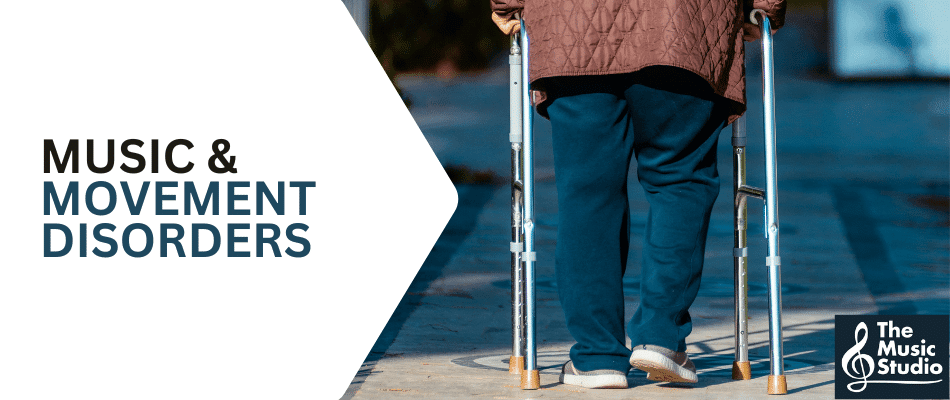
Did you know that music and dance can be effective treatments for those suffering from a range of movement disorders? Specifically, rhythm has been shown to improve speed, gait, and balance. Rhythm also reduces the number of falls experienced by those with movement disorders. One of the hallmarks of movement disorders such as Parkinson’s is slowness and rigidity, both of which fade while movement becomes more fluid when listening to music. What’s more, music and dance fill an emotional void and help maintain good quality of life and overall well-being.
Let’s take a deeper dive.
Common Movement Disorders
Parkinson’s Disease
Parkinson’s disease is a progressive nervous system disorder that impacts movement. Early stage sufferers may experience reduced facial expressions, a slight tremor in the arms and hands, and soft or slurred speech. As the disorder progresses, movements are slowed, balance and posture are affected, and both speech and writing show significant changes.
Currently, there are no known cure’s for Parkinson’s, but there are medication and treatments, like music therapy, and have a positive impact on symptoms.
Huntington’s Disease
Huntington’s disease is a progressive brain disorder that results in uncontrolled movement and emotions, as well as a loss of cognitive functions. Some of the early symptoms include irritability, depression, small involuntary movements, poor coordination, and difficulty recalling new information. Over time involuntary jerking or twitching may develop, and become more pronounced as the disorder progresses.
Like Parkinson’s, there is currently no cure for Huntington’s, but treatments like physical, talk, and music therapies can provide short-term relief.
Dystonia
Dystonia is a movement disorder in which muscles contract uncontrollably. This contraction causes involuntary twisting, which results in repetitive movements and abnormal pastures. Early symptoms may include cramping in the leg or foot, involuntary pulling of the neck, uncontrolled blinking, and difficulties with speech. Dystonia also typically impacts women more than men.
Although further research is needed, dystonia appears to be related to an issue with the basal ganglia; a part of the brain responsible for initiating muscle contractions.
Similarly to both Parkinson’s and Huntington’s, there is no known cure for dystonia. However, treatments like music therapy can help with after-effects.
Rhythm Neuroscience
Rhythm has–and will always have–a fundamental impact on human’s ability to walk, talk, and feel different emotions. Our ability to both process and create unique rhythms comes from our innate need for social cohesion; rhythm is not just a fundamental aspect of music, it’s a fundamental aspect of being human. This is something most people have an intrinsic understanding of, but recent findings in the study of neuroscience back that notion up.
Training of auditory neural activity has shown that strong perception of a musical beat engages the motor system of the brain. This includes regions like the premotor cortex, basal ganglia, and supplementary motor regions. This reveals an intimate connection between music and the brain’s motor functions.
This finding can be applied to help patients dealing with movement disorders. For example, a clear, steady beat helps Parkinson’s suffers overcome their shuffling gait. And while music is not a cure for the disorder, it does significantly improve quality of life. Furthermore, it has been found that people with Parkinson’s hear rhythms differently than those without movement disorders. Large groups of movement disorder patients have reacted strongly to group music therapy treatments.
Music Therapy Interventions for Movement Disorders
While you would be hard pressed to find anyone tat doesn’t like some for of music, it’s also been discovered that music makes improving the brain easier than first thought. In fact, brain activation caused by music translates into impressive health improvements. Playing, listening to, or even just interacting with music have all been shown to lower the stress hormone cortisol, as well as increase the number of cells that make the immune system more effective. Furthermore, music has been shown to impede viral infections, and most importantly for our purposes today, benefits those suffering from long-term movement disorders.
Here are a few of the ways music and rhythm help such patients:
- Vibration: Two fundamental aspects of music are vibration and rhythm. One specific kind of music therapy called Vibroacoustic Therapy (VAT) is especially useful for those with Parkinson’s. VAT uses sounds and vibrations to reduce stress, relieve pain, restore balance, and improve quality of life. Furthermore, the vibrations created by this therapy can decrease stiffness, reduce tremors, and lengthen walking strides.
- Group Therapy: Group music therapy sessions help patients feels less isolated and help with anxiety.
- Vocal Control: Patients with Parkinson’s that participate in singing have reported significant improvements in pitch duration, vocal loudness, and swallow control. Since Parkinson’s is degenerative, participating in vocal lessons can help slow down the progression of the disorder.
Music & Movement Disorder Conclusion
Music is good for the soul, and music therapy is good for the body! Of course, the very best way to reap these benefits is to make a schedule and stick to it. That way patients don’t only benefit from the therapy itself, but also the anticipation of having something positive to look forward to!
–
There are many research studies that demonstrate a direct connection between music and health.
The Music Studio’s Seniors Connecting Through Music Program is a great way for older individuals to experience the mental and physical benefits offered by music.
Our programs apply research-based approaches that are shared with a personal touch by The Music Studio’s specialized Seniors Connecting Through Music teachers Shelby Lynn, Ed Lettner and Reknee Harrett. Whether you have taken music lessons before or are a beginner, music is a wonderful way to lift your spirits and enhance your life. Our seniors music program may include performances of, and sing-alongs to, your favourite classics, and instruction in singing and/or piano if one wishes to do so. The program is designed and facilitated by the teacher who brings their personal musical background and training to each session to meet the specific needs of the individual. The Music Studio’s goal is to provide a positive, relaxing and rewarding experience at each lesson.
Sign up today!