
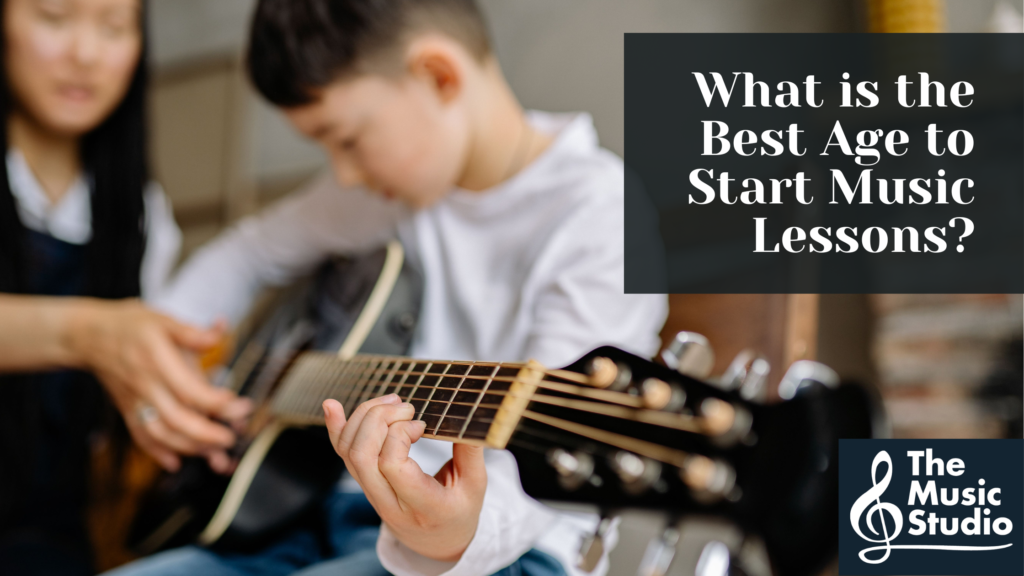
Music has an incredible effect on the brain. We’ve talked about it before. So it’s no wonder parents all over the world are enrolling their little ones in music programs of every type. But one crucial question comes up for many parents before they sign their children up: what is the best age to start music lessons?
The short answer is: it’s different for everyone.
There are a lot of things to consider when deciding if your child is old enough to begin music lessons. Things like your child’s interest levels, their ability to focus their attention, what and who programs in your area are designed for, or even the instrument they want to play can all impact the age that they should–or even can–begin lessons.
Best Age to Start Music
To begin with, try to keep in mind that the newness and novelty of music lessons will quickly wear off. If your child isn’t committed beyond that, it might be too early for them. Focus is another key characteristic. In general, kids should be able to focus on a single task for at least 15 minutes at a time before starting a music program. Remember that most music lessons are 30 to 60 minutes long, and are often broken into smaller portions of listening, playing, and other learning activities. If your child can’t stay on task for 10 to 15 minutes, they may be too young for traditional music lessons.
The instrument your child might be interested in also impacts when they can start lessons. The piano can be started as young as 3 or 4. However, other instruments, like the guitar, drums, or saxophone, shouldn’t be started until 7 or older. Trumpet or saxophone should be started even later, at around 10 or 11. This is sometimes because of the sheer size of the instrument, and other times because of the understanding needed to play them. Of course, these ages depend on the child. For example, a child who is tall or agile for their age might be able to start guitar lessons a year or two early.
That said, traditional lessons are only one way to introduce children to a musical education. Some studies have shown that children can not only hear music while in the womb, but some even seem to develop style and genre preferences as a direct result! Age-appropriate early music programs aren’t always the easiest to find, and finding a good instructor who keeps things fresh and interesting can be even harder. However, they can be well worth it.
6 to 24 Months
Classes for parent and baby are a fantastic way to start your child’s education in music; sometime at as young an age as 6 to 8 months. These classes tend to be shorter, running 30 to 40 minutes, and require the active participation of you, the parent. These simple classes introduce children to rhythm, harmony, and melody in a very basic way.
Programs for 18 to 24-month-olds are also extremely popular. These classes usually also require parental participation, but by this age, the kids engage in the class activities a bit more on their own.
3 & 4 Years Old
Nowadays, especially in cities, there are a lot of programs designed for kids aged 3 and 4. Most professionals would agree that this is the best age to start music lessons. These music programs are usually about 30 to 35 minutes long and use a lot of props, singing, and movement to keep kids engaged. Many even incorporate arts and crafts and free play time with rhythm instruments. Most of the time parents aren’t required to participate, but some invite parents to join in on the fun.
Ages 5 & Up
5 years old is the typical age for either individual or group piano or violin lessons. The piano or keyboard is usually easier for kids aged 5 or 6. What’s more, just a single year of instruction at the piano gives an amazing foundation of basic music concepts, like the music alphabet, what quarter-, half-, and whole-notes are, and what a music staff does. Kids also tend to learn fun childhood classics like “Mary Had A Little Lamb” and “Twinkle, Twinkle Little Star.”
Certain, modern, specialized programs, like Kidzrock, take things a little bit further. Programs like these utilize miniaturized and simplified versions of instruments, like the guitar and keyboards. Furthermore, they use rock songs specifically written for the program to keep kids excited and engaged.
Ages 7 & Up
Around age 7 most of the orchestra becomes available for students to learn. Instruments like the guitar, drums, stringed instruments, and some woodwinds are perfect for this age group. A lot of the same concepts that are covered at an earlier age for piano students are learned. That said, kids who have at least 6 months of piano training, and already understand many musical elements, find it easier to transition to another instrument.
And of course, while it’s never too early to get your child started in music, it’s never too late either!
Ages 8 & Up
Most elementary schools have an opportunity for children in grades 3 and up to start taking group music lessons. Instruction is usually available in pretty much the entire orchestra. This gives kids the chance to play in a band or ensemble with their friends; something most people remember fondly throughout their lifetime. The only disadvantage to this system is that any student who might need a little extra help might not get it, which can lead to discouragement. Classes outside school help to reinforce the lessons learned and help them succeed.
Adult Music Education
We’ve spending a lot of time discussing the very earliest opportunities for musical education for children. But the fact is, it’s never too early or too late to start. The “best” time to start music lessons is right now, no matter your age! If you’ve always wanted to pick up an instrument, or if you gave up on music as a child because of a bad teacher, now is the perfect time to start again! You can still take instrument or voice lessons, and even form an incredible bond with your children as you both embark on a journey of learning and musical discovery together.
Check out all The Music Studio’s programs – for adults and children – and sign up today!