
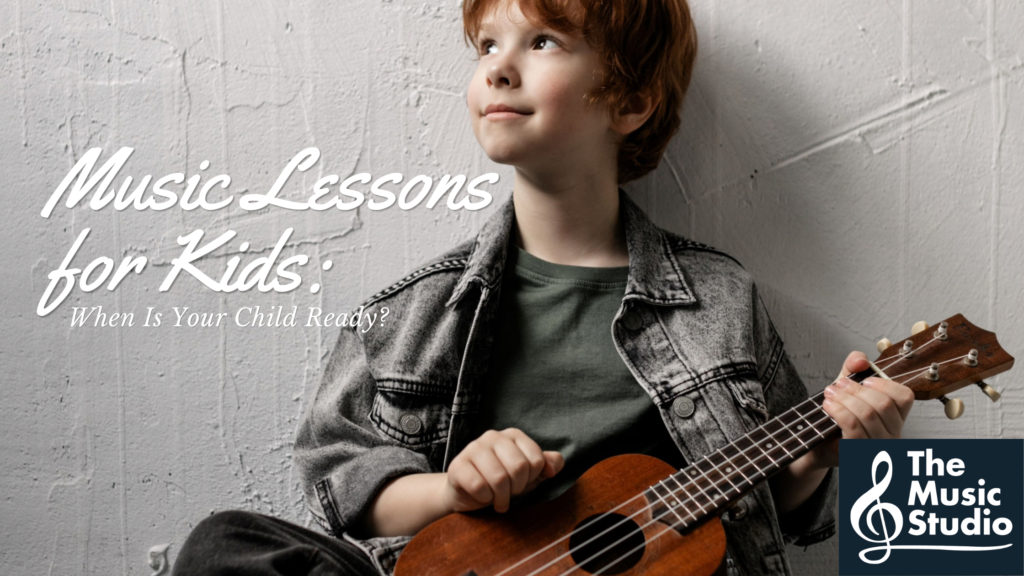
Are music lessons for kids worth it?
During the summer we took some time to answer the question, “What is the Best Age to Start Music Lessons?“
The the truth is, age is only part of the equastion.
The other side of the coin is whether or not your child is ready for, or even interested in, music lessons.
Most (some might argue all) children have a natural affinity for music. Even babies instinctively move their bodies to dance to the beat, or belt out some nonsense words when they hear singing. Studies even go so far as to suggest this love of music may be hardwired into our brains from birth. And consistent exposure to music after that can foster a lifelong love.
But beyond age, when is the right time to enrol them in lessons?
Here are some of the most important signs they’re ready–or not.
They Want to Learn Music
One of the most obvious signs is simply how interested they are in music. Here are some clear indicators that they have an innate interest in music:
- They get excited when they hear familiar music and respond by dancing, singing, clapping or bouncing to the beat.
- That have a favourite song and remember complex music.
- They show an interest in a specific instrument.
- They mimic melodies and rhythms and ask for songs to be repeated.
- They hum their own music and sing their own melodies.
- They pretend to play instuments.
- They ask a lot of questions about music, like “Who is singing this?” or “What instrument is that?”
Nurturing this kind of interest can spark passion. There are many ways to support their early interest in music:
- Show them new styles of music.
- Go to live music events.
- Discuss different instruments and music with them.
A child with genuine interest will find music lessons engaging and rewarding, which leads to a solid foundation for more advanced lessons later.
They Can Read & Count
A strong grasp of their ABCs and 123s is another key component to whether or not a child is ready for music lessons. They should be able to both remember and recite their letters and numbers well. This is a critical skill for reading music and learning notes, time signatures, count beats, rhythms, and meters.
While every child is different, it is typical for kids to start learning these important skills around two or three years old.
They Have Well-Developed Coordination
One of the hallmarks of playing an instrument is coordination between the brain, eyes, hands, wrists, fingers, and feet. That means students will need to have developed their coordination and fine motor skills to confidently and properly press the keys on a piano, strum a guitar, or hold a drum stick.
Watch for these signs you child has developed the necessary physical coordination for music lessons:
- Holding utensils
- Cutting paper with scissors
- Trying their shoelaces
- Completing simple puzzles
- Walking, running, and climbing stairs
- Catching, throwing, and kicking balls.
- Hopping on one foot
- Holding writing implements correctly, like pens and crayons
- Swaying, marching, tapping.
Most kids have developed these motor skills enough by around ages six or seven to properly handle and play a musical instrument.
They Can Focus for Long Periods
Music lessons require kids to pay attention, follow instructions, and push through difficulty without giving up, especially as they advance into more difficult things. Not all children, especially younger kids, can stay focused through all that for 20 or 30 minutes.
Watch their attention and concentration abilities for these signs they may be ready for music lessons:
- Can sit and concentrate on a task for 10-15 minutes.
- Pays attention during story time without distracting others.
- Can follow simple directions in a group environment.
- Can focus on education kid’s programming for 15-30 minutes.
- Can focus in a distracting environment without becoming disruptive.
The more attentive a child is for longer periods of time, the greater the chance of their success in early music lessons.
They Can Stick to a Schedule
Making practice part of the routine is essential for progress in any endeavour, but especially in music. If your child follows a daily schedule, and can stick to it, they may be ready for music lessons.
These routines may be as simple as waking up on time, getting dressed, brushing their teeth, eating breakfast, and being ready to leave for school. The more smoothly this process goes on a regular basis, the more likely they are ready for lessons.
Music Lessons at The Music Studio
Through your child’s fun and engaging results oriented lessons with their dedicated and nurturing teacher at The Music Studio, your child will develop confidence, commitment and problem solving skills while experiencing the joy of making music.
Your child has the opportunity to take centre stage and be the star as they share their music with family and friends at The Music Studio’s monthly concerts.
Choose from The Music Studio’s in-person, or live and interactive online lessons taught in a welcoming and professional learning environment. Check out all our lessons and bands, and sign up today!